
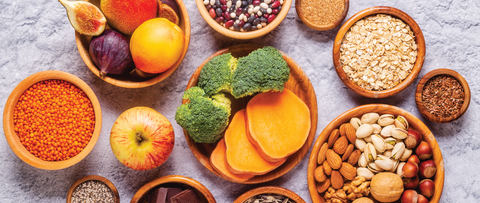
Fiber February is our way of highlighting a nutrient that’s essential but often overlooked. By choosing whole foods and fiber-rich products more consistently, small daily habits can support better digestion and long-term wellness.
What Is Fiber?
Dietary fiber is mostly found in plant foods that the body can’t fully digest. Instead of being broken down and absorbed like other carbs, fiber passes through the digestive system largely intact, doing important work along the way.
There are two main types:
- Soluble fiber, which dissolves in water and forms a gel-like substance in the gut. This type helps support healthy blood sugar levels, cholesterol balance, and feeds beneficial gut bacteria.
- Insoluble fiber, which adds bulk to stool and helps food move efficiently through the digestive tract.
Most fiber-rich foods contain a mix of both, and your body benefits from having them work together.
Which brings us to the topic of today’s blog…
The Main Sources of Fiber
Fiber is found almost exclusively in whole, plant-based foods. The most reliable sources include:
Veggies
Vegetables are one of the most consistent and nutrient-dense sources of fiber. Leafy greens, broccoli, Brussels sprouts, carrots, squash, and artichokes all contribute meaningful amounts of both soluble and insoluble fiber. Eating a variety of vegetables helps ensure a broader range of fibers that support different gut bacteria.
Fruits
Fruits—especially when eaten whole and with the skin—are rich in fiber. Berries, apples, pears, and citrus fruits provide soluble fiber that supports digestion and microbiome health. Fruit fiber also tends to come packaged with water and naturally occurring sugars, which slows digestion and promotes satiety.
Legumes
Beans, lentils, and chickpeas are among the most fiber-dense foods available. They contain both soluble fiber and resistant starches that act as prebiotics, making them especially beneficial for feeding the gut microbiome and supporting digestive regularity.
Whole Grains
Whole grains retain the bran and germ, which is where most of the fiber is found. Oats, seeds, and whole-grain flours contribute insoluble fiber that supports digestion, as well as soluble fibers like beta-glucans that benefit heart and metabolic health. Refining grains removes much of this fiber, which is why whole forms matter.
Nuts and Seeds
Seeds such as flax, chia, and sunflower seeds provide concentrated sources of fiber along with healthy fats. These fibers help slow digestion and support gut health, while also contributing texture and nutritional density to foods.



Comments (0)
There are no comments for this article. Be the first one to leave a message!